
What are My Options during a Foreclosure?
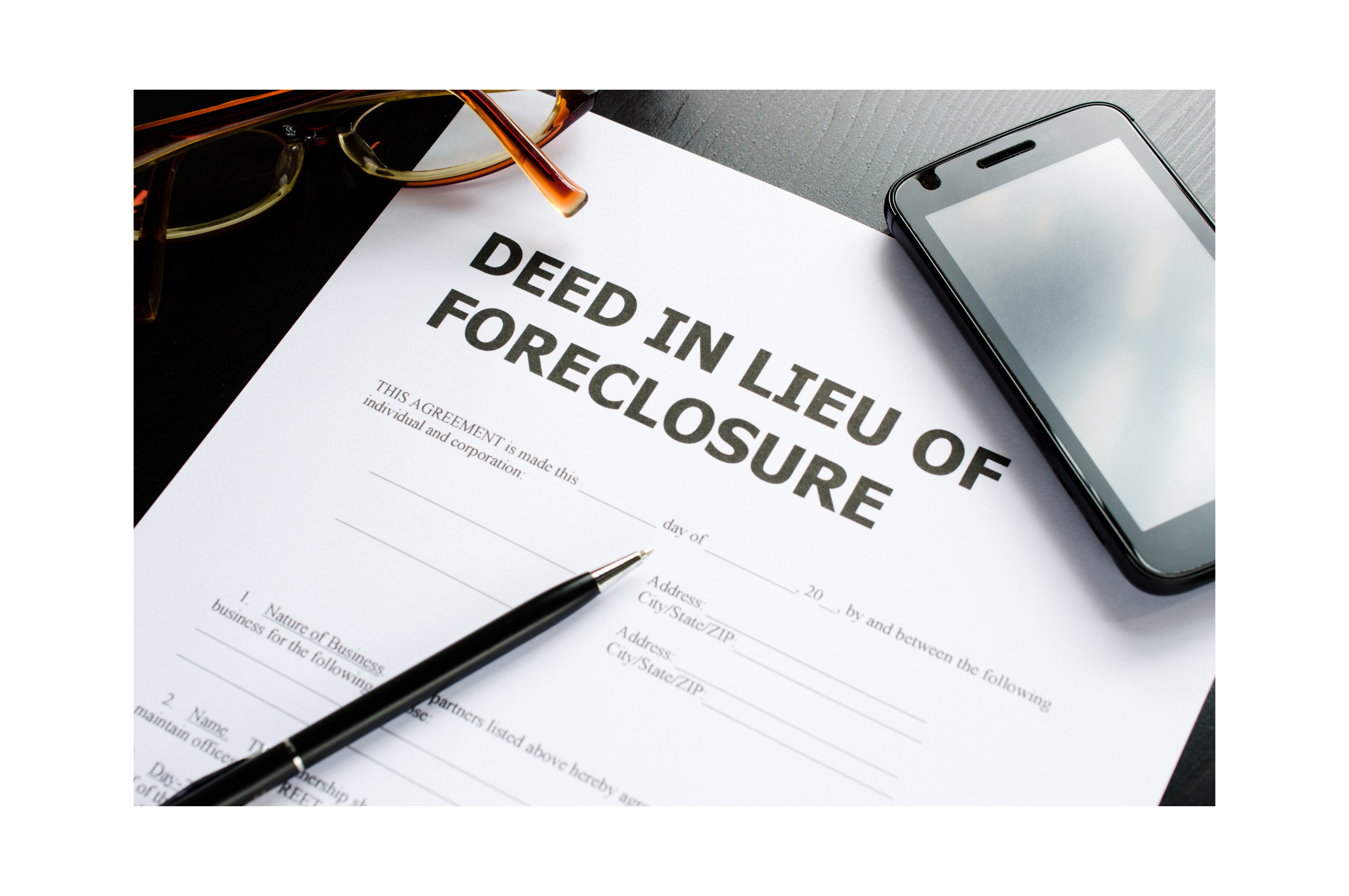
A "deed in lieu of foreclosure" is a legal arrangement between a homeowner and a mortgage lender when the homeowner is struggling to make mortgage payments and facing the possibility of foreclosure. In this process, the homeowner voluntarily transfers ownership of the property back to the lender to satisfy the outstanding mortgage debt. The lender, in turn, agrees to cancel the remaining debt owed by the homeowner.
Here's how the deed in lieu process typically works:
Financial Hardship: The homeowner must demonstrate to the lender that they are experiencing financial hardship and are unable to continue making mortgage payments. This could be due to job loss, medical expenses, divorce, or other financial challenges.
Negotiation: The homeowner contacts the lender and expresses their interest in pursuing a deed in lieu. The lender will assess the homeowner's financial situation and the value of the property to determine if this option is viable for both parties.
Application: The homeowner submits a formal application for a deed in lieu of foreclosure. This application usually includes financial documentation, a hardship letter explaining the circumstances, and details about the property.
Valuation: The lender will order an appraisal or a broker's price opinion (BPO) to determine the current market value of the property. This helps the lender assess whether accepting the property through a deed in lieu is financially sensible compared to the cost of pursuing foreclosure.
Agreement: If the lender finds the proposal reasonable, they may agree to the deed in lieu option. Both parties sign an agreement that outlines the terms and conditions of the arrangement.
Transfer of Title: The homeowner signs over the property's title to the lender through a "deed in lieu" document. This essentially transfers ownership of the property back to the lender.
Release of Debt: In exchange for the property, the lender agrees to release the homeowner from any further obligation related to the mortgage debt. This means the homeowner is no longer responsible for the remaining mortgage balance.
Transition: The homeowner typically has a specific amount of time to vacate the property, which is usually negotiated as part of the agreement. The property is then under the ownership of the lender.
It's important to note that while a deed in lieu of foreclosure can be less damaging to a homeowner's credit compared to a foreclosure, it may still have negative credit implications. Additionally, the homeowner must meet certain criteria, and the lender must agree to the arrangement. If the property's value is significantly lower than the outstanding mortgage debt, the lender might not accept a deed in lieu.
As with any complex financial situation, it's recommended to consult with legal and financial professionals before pursuing a deed in lieu of foreclosure or any other major financial decision.
In-text citation: (ChatGPT, 2023)Reference list: ChatGPT.
(2023, August 28th).

HEY, I’M NATALIE
.Name: Natalie Brown
Title: Real Estate Foreclosure Investor
Passionate about real estate and driven by opportunity, I'm Natalie, a dedicated real estate foreclosure investor. With a sharp eye for hidden potential, I specialize in identifying undervalued properties within the foreclosure market. My mission is to transform distressed houses into valuable assets while contributing to community revitalization, and bringing forth viable information and ensight on the forclosure process.
Connect with me for insights, strategies, and success stories in the realm of foreclosure real estate investing. Let's redefine what's possible, one property at a time.
Investing Forward,
Natalie Brown


JOIN MY MAILING LIST